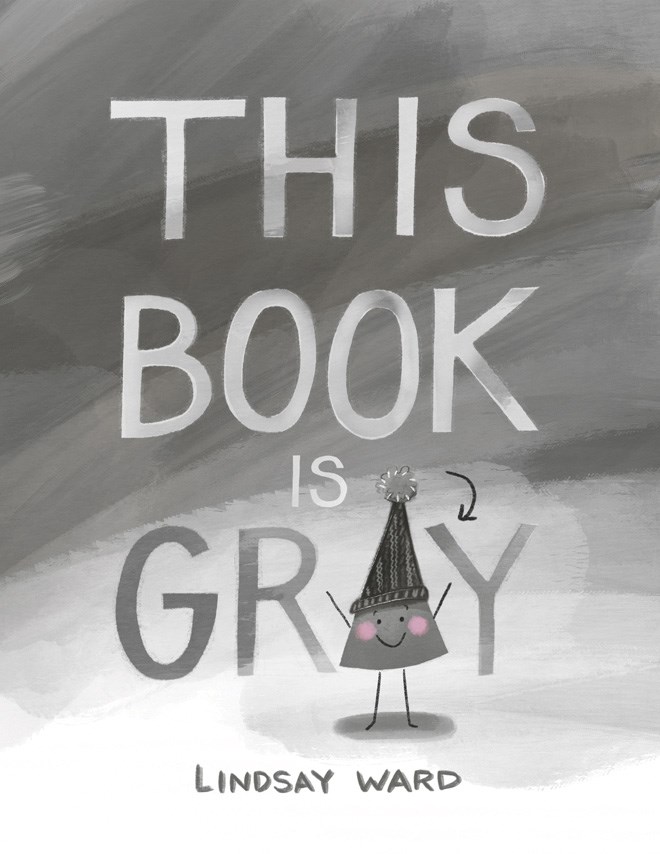
Twelve-year-old
Cove doesn’t know what she’ll do without her best friend, Nina. Nina is the one
who helps her ignore the girls who bark at her and call her Rover, like she’s a
dog. Nina has always understood that Cove’s free-spirited mom doesn’t believe
in cell phones, designer clothes, and makeup. So when Nina announces she’s
moving to New York City from their home on Martha’s Vineyard, Cove just has to
find a way to see her. She gets an idea to enter a reality show for kids, but to
do so she’ll have to lie to her mom and her new friend Jack. When her deception
catches up to her, she’s not sure how to fix it.
Out of
Place by Jennifer Blecher deals with a lot of
common issues teens and preteens face on a regular basis. How do you respond to
bullies? How do you react to your mom’s new boyfriend? What happens when you
have no control over major events in your life? How do you know who to trust
when you need to confide in someone? Cove ponders all these questions and more after
her best friend and emotional lifeline moves away.
As Cove makes new friends and learns to trust others, she begins to see a way forward in the situation she creates as well as with life in general. Out of Place is a great book for any reader and for mother-daughter book clubs with girls aged 8 to 12.
The publisher
provided me with a copy of this title in exchange for my honest review.
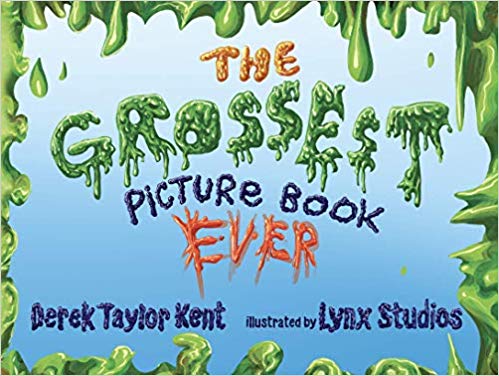
A
chance encounter between a hungry child and a New York City office worker led
to a life-long relationship that changed both people. Maurice came from a poor
family where the adults assumed he would take care of himself, even though he
was only eleven. Often, there was no food in the refrigerator and he would be
hungry for days. That’s when he would go to his favorite street corner and beg
for change.
Laura
worked at USA Today, a newspaper that
Maurice had never even heard of. She lived just two blocks from Maurice, but
they were worlds apart. When Laura saw Maurice begging for change, she passed
him by. But something made her turn around and offer to take him for a
hamburger at McDonald’s.
That meal
turned out to be the first of many, with the two of them meeting every Monday
for years. Maurice was suspicious at first, because his family taught him that
people weren’t nice unless they wanted something, but gradually he came to
realize Laura only wanted to be his friend. Over time, she provided guidance
that helped him do better in school and dream about having a future.
The story of Laura and Maurice was written as nonfiction for adults, and became a New York Times bestseller. An Invisible Thread: A Young Readers’ Edition, is an adaptation of the original story for adults. Even though the events depicted took place in the 1980s, this incredible story still holds relevance today.
Written by Laura Schroff with assistance from Alex Tresniowski, An Invisible Thread is a powerful story of compassion, acceptance, and unlikely friendship. Even though Maurice’s mother and grandmother were neglectful, he loved them fiercely. Laura didn’t try to force change on Maurice that he didn’t want, but she did provide love and stability when his world was often rocked by chaos and uncertainty.
Photos of the two and their families at the end of the book help readers see the people behind this real-life story of triumph. I recommend it for readers aged 8 to 12.
The publisher provided me with a copy of this title in exchange for my honest review.
Some of kids’ favorite writers, people like Roald Dahl, Dr. Seuss, and Madeleine L’Engle, were also young before growing up to become famous. And learning about the lives of these writers-in-the-making can provide inspiration for children, possibly prompting them to learn more or even to write stories of their own. Before They Were Authors: Famous Writers as Kids by Elizabeth Haidle talks about these budding writers as well as others, profiling 10 in all.
The
graphic format combines illustrations with snippets of facts and a timeline of
each author’s life to show that even well-known people can try and fail many
times before becoming successful. For instance, Samuel Clemens, aka Mark Twain,
tried many jobs, including being a lumberman, steamboat captain, and silver
miner, before he started to write stories that sold. Dr. Seuss’s art teacher
once told him he would never learn to draw. And Gene Luen Yang self-published
his comics, photocopying and stapling them himself, before a publisher offered
him a contract.
Readers
also learn about Maya Angelou, Sandra Cisneros, J. K. Rowling, Beatrix Potter,
and C.S. Lewis. Before They Were Authors is great for ages 8 to 11, but can be
appreciated by older readers as well.
The publisher
provided me with a copy of this title in exchange for my honest review.
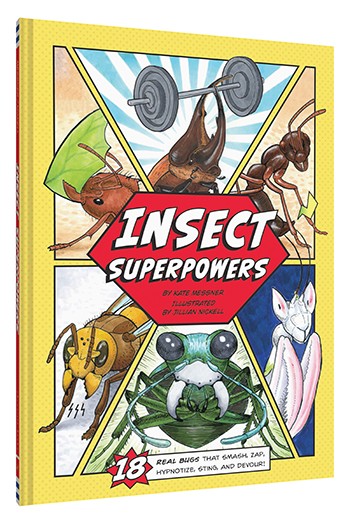
Olive
and Willow are excited about going away to summer camp together for the first
time. As best friends, they imagine doing all their activities together and
having nonstop fun. But once at camp, Olive is outgoing and makes new friends
easily, while Willow is more shy and waits to join in. Willow starts to feel
abandoned, and the two are soon at odds over how to spend their days. Can they
find a way to both be happy before summer ends?
Camp by Kayla Miller is a graphic novel that
shows friendship is an evolving thing that sometimes has to be worked at to be
saved. Olive and Willow don’t want to lose what they have, but they also need
to find a way to enjoy each other’s company without feeling like they’re giving
up other experiences. Their solution, when they find it, provides a great
example for anyone facing similar issues.
Miller
treats her characters gently, showing the struggles they face as they search
for ways to be happy without hurting their long-term friendship. Her
illustrations capture complex emotions and move the story along expertly.
Camp is a great book for anyone prepping to go
to summer camp with or without friends, or for any young reader facing an issue
of evolving friendships, which is most everyone. I recommend it for readers
aged 8 to 12.
The publisher
provided me with a copy of this title in exchange for my honest review.
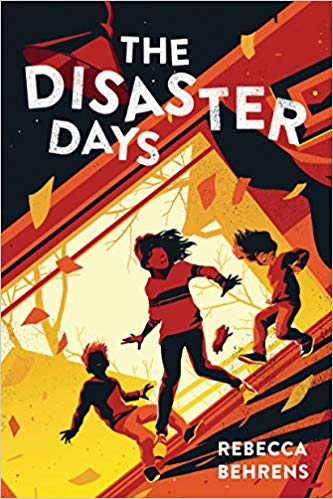
When
Eric’s grandma leaves her home for an assisted living facility, her house next
door to his is sold to a veterinarian, who turns it into a clinic. Dr. Brancusi
hires Eric to help out cleaning stalls and caring for the animals. His
employment, though, means he has to keep a secret: along with dogs, cats and
other pets, Dr. Brancusi treats all sorts of magical animals. There’s a Cheshire
cat, a goose that lays golden eggs, and a squonk. But Eric’s favorite is the
unicorn, Moonpearl, and he’ll do anything to keep her safe.
The
Unicorn in the Barn by Jacqueline K. Ogburn
is a sweet story about a boy experiencing a tough time in his family life who
finds comfort in caring for animals, both magical and ordinary. Eric finds that
though his jobs are sometimes messy and smelly, feeling connection with those
who need his care is worth the work. As he goes along he also earns the trust
of the veterinarian’s lonely daughter, Allegra, and forges a deeper bond with
his grandma.
The tale unfolds gently, with Eric and Allegra both experiencing challenges, losses, and triumphs. It’s a story sure to appeal to sensitive readers and those who like stories about animals and magical beings. I highly recommend it for ages 8 to 12.
The publisher
provided me with a copy of this title in exchange for my honest review.
We
Are the Change: Words of Inspiration from Civil Rights Leaders takes an innovative approach to
introducing young readers to important figures in the fight for civil rights.
Sixteen award-winning children’s book artists chose quotes from activists who
fought for the rights of minorities, women, farm workers, and others from the
past and present. This diverse group of activists included Helen Keller, Maya
Angelou, Frederick Douglass, Eleanor Roosevelt, Dolores Huerta, Khalil Gibran,
and more. The artists then let the quotes inspire an illustration.
For
instance, Molly Idle, creator of Flora and the Flamingo and other books,
illustrated this quote from Eleanor Roosevelt: “Where, after all, do universal
human rights begin? In small places, close to home—so close and so small that
they cannot be seen on any map of the world.” Her art shows a group of
children roasting marshmallows over a campfire.
Emily Hughes, who grew up in Hilo, Hawaii, illustrated this quote from Queen Lili’uokalani: “You must remember never to cease to act because you fear you may fail,” with an image of a child weaving a mat surrounded by lush tropical plants.
Along
with the illustrations, the artists also talk about what the quotes mean to
them. This integrative approach can inspire young readers to think about their
own reactions to the words and images. Biographies of the artists in the back,
along with the books they’ve written and/or illustrated, can lead to further
reading.
The publisher
provided me with a copy of this title in exchange for my honest review.
What
happens to our garbage after it’s collected from the curb in front of our house?
We know it goes away, but where is away and what does that mean? Garbage:
Follow the Path of Your Trash by Donna Latham answers that question and
more about the things we throw away.
Filled
with fascinating information, Garbage has charts, pull-out
definitions, activities, history, and other tidbits of facts to help anyone figure
out how to reduce, reuse, repurpose, and recycle a multitude of items. It helps
readers figure out how much garbage they produce and what types of trash end up
in landfills. There’s also a great piece on how landfills are created and how
they are filling up.
Separate
chapters include info on hazardous and medical waste as well as investigating
past civilizations through the trash they left. The book makes clear that
everyone creates garbage of some type, but tells why it’s important for us all
to find ways to create less of it.
Some
activities are simple, some are more involved, but they are all fun. Examples
include building a garbage can compost heap, creating a junk mail bead
necklace, discovering how different types of bags break down, and tie-dying old
shirts with vegetable dyes. A glossary of terms in the back is helpful, as is a
list of resources for more exploration.
Garbage is the kind of book that can be referred to for years, with young readers trying different activities when they get curious about different topics. I highly recommend it for readers aged 9 and up.
The publisher
provided me with a copy of this title in exchange for my honest review.
Music features prominently in author Kirstin Cronn-Mills’s books. In this guest post she talks about how music and songs can help all of us get through difficult times. To find out more about the author and her books, visit her website, kirstincronn-mills.com.
Photo by Chelsea Kocina at Chelsea Morning Photography
Thank you for hosting me!
There are three consistent threads in my books: one is a caring grown-up for each protagonist, the second is teenagers who are outsiders, and the third is music.
Music is the art form that keeps me afloat in this world. I love all kinds of art, of course: I have season tickets to our local university theatre (and go to community productions, too); I hit any art museum I can; I am (duh) always reading something; but music is in my life every. Single. Day. And yes, I mean every day. I can’t start my work day without a carefully chosen song for the drive to school (yes, I live close to my college—a four-minute song is just about perfect). I can’t work in my office without Pandora. I can’t write a book without a playlist. I can’t do housework without iTunes. Music is my life raft, and I’m always clinging on. You may think that sounds dramatic, but I assure you it’s not.
My first novel, The Sky Always Hears Me and the Hills Don’t Mind, has no pop music in it—its musical component is the classical music Morgan’s grandma plays as a concert pianist. Beautiful Music, of course, is a long meditation on how music keeps us safe, sane, and alive when shit is rough. Gabe is probably the character most similar to me, simply for that reason. There isn’t a whole lot of music in Original Fake, but Frankie’s dad is a character in a musical, and his bestie models himself after (and is named after) 80s David Bowie, with a little more femininity.
Wreck’s musical connection isn’t obvious for a few chapters, then we discover Steve’s love for Gordon Lightfoot and “The Wreck of the Edmund Fitzgerald.” Little Kid Steve was in the right place at the right time to see the ship steam right in front of him, leaving the port for its awful fate, and he gets obsessed with the song once it comes out. The song worked as an unhappy but fitting metaphor for what Tobin and her dad are going through as his ALS progresses.
Of course the playlist for Wreck includes “The Wreck of the Edmund Fitzgerald,” so I’ve listened to the song countless times in the last four years. As songs go, it’s really pretty brilliant. It’s a bit longer than most (6:29), and I’ve never met a song that can make me cold, but that one can. It’s instantly November, the moment you hear the first note. I can’t imagine what kind of power it takes to destroy an ore boat, but I can clearly see how Lady Superior could muster it, and somehow Gordon Lightfoot captures that strength. I’ve experienced some pretty turbulent days on its shores (though in May rather than November) and that lake scared the shit out of me. Somehow Lightfoot captures all of it in his song. When we listen, we can literally feel his “witch of November.”
Even my car makes a difference in my musical life. I not-so-laughingly call it a rolling stereo (it’s a 2018 Prius, with a damn decent stereo system and Bluetooth). You’ll always find me somewhere with some playlist bouncing out its windows. And I don’t apologize for my eclectic, ever-present music, either. We all need something to get us through our days and nights, and music is much less harmful than a million other things. My son is leaving for work as I write this sentence—leaving in my old Prius, which has an aux cord (of course!). His music is loud, too. As legacies go to pass on to your child, relying on music to help you through life is a pretty great one.