Kimberley Griffiths Little
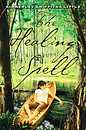
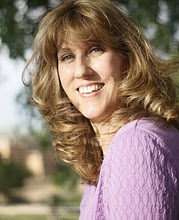
Recently, I caught up with author Kimberley Griffiths Little, asking her to tell us a little bit more about herself and her book, The Healing Spell. Here’s the interview:
Tell us a little bit about how you got the idea to write The Healing Spell?
KGL: Three words: Family Road Trip. About twelve years ago, we drove the Highway 10 corridor through the southern states, stopping in Louisiana and New Orleans for several days to explore. We met a Cajun man who lived deep in the bayou whose fascinating stories and lifestyle immediately captivated me. He took us in his boat into the bayous and swamps and showed us where he lived and hunted and fished and showed us his crawfish traps. He even fed chicken to the alligators that swam up to our boat to say hello and check us out. Well, maybe they were just hungry! For me, unique settings are always the first thing that captures my imagination and after that trip I knew I wanted to set a book there someday.
The Healing Spell is peppered with so many vivid characters, and the setting is almost a character on its own too. How did you learn so much about Louisiana bayou country and the people who live there?
KGL: I fell in love. Hard. I couldn’t stop thinking about my experiences in Louisiana and the magic I felt there and the people of the bayous. I started reading dozens of books-everything I could get my hands on from novels to memoirs to non-fiction and wildlife photographers-gobbling it all up for a decade.
I returned again and again, staying in a cabin on the bayou, eating crawfish and dirty rice, dancing to live Cajun bands, visiting every museum I could find, watching documentaries.
I’ve made so many friends there now that I feel like I’m an adopted Cajun girl and it’s my second home.
What kind of research did you do to be able to add details about Livie’s mama being cared for at home while she was in a coma?
KGL: At the time I was day-dreaming about Livie and her life on the bayou, I wanted to write a family story about parents and siblings and the relationships and dynamics in a stressful situation, but I also wanted to write a story about faith and healing and surviving, themes that are very important to me.
I lost my dad in an airplane accident when I was 14 years old and my mother was left with six kids from 5-15 years of age. Tragedy can tear families apart and I wanted to explore those bonds of love and hope that survive no matter what life throws at us. But I didn’t want to do a death book. There are so many books about parents or siblings dying in children’s literature. About this same time period, I was reading several books about comas and their effect on families. I was intrigued as well as horrified by the stress and uncertainty of the person who was in a coma as well as the effect it had on the family members. I read many articles and websites about coma and the care given as well as treatments for waking people up and I talked to several nurses about some of the medical details.
There are many complex family relationships in The Healing Spell. I loved the way you described the relationship with Livie and her sisters, including both the frustrations and the tender moments they shared. Did you draw own your own sibling experiences to create such a broad array of deep characters?
KGL: I have two sisters just like Livie, although I’m the oldest, not the middle girl. Middle kids seem to naturally have a lot of angst, although I had plenty growing up because I was horribly shy and insecure about myself so I do relate to Livie. I also have three brothers which makes my sibling experiences large and varied. We grew up like most kids do, squalling and picking at each other, but we have close relationships now and my two sisters are my best friends. In fact, THE HEALING SPELL is dedicated to my two sisters, Kari and Kirsten. (A side note: All six of my siblings have names that start with the letter “K”. Blame my parents.) J
Livie is sure her mama loves her less because she’s not “girly” like her sisters. What do you think mothers and daughters who differ in personality can do to find common ground and be able to bridge their differences?
KGL: Mother/Daughter relationships can be very tricky. I think this is because mothers naturally have specific hopes and dreams for their daughters and expectations, but sometimes their daughters don’t “live up to” mom’s wishes. Daughters need to be accepted for who they are, not for who their mothers want them to be.
I definitely think there’s always hope! Moms can spend more time listening than talking, they should try to find an activity their child likes and is interested in, whether its books or music or any sort of hobby and try to spend time with their child engaging in that activity or just talking about the subject(s) they love. You’ll end up learning things you never knew before! It takes time and it takes being aware and that’s the hardest part in any relationship. If you have a difficult time coming up with common ground with your daughter, try sitting down and writing down as fast as you can (each person having their own separate paper list) everything you can think of that you like or are interested in. Rate your interests/likes/hobbies from 1-10 in order of preference and likability. Then compare your lists and pick something that matches and come up with something you can do together. Then go have fun! It could be something as big as a concert with dinner at a favorite restaurant to something as simple as watching a favorite television program or talking about a favorite book or listening to a piece of music or taking a walk or trying out perfumes together or just getting ice cream! Be genuinely interested and you’ll win her over – at least for today.
Have you ever had an experience with a “traiteur,” a healer, or do you know someone who has?
KGL: In my research reading, I kept stumbling across small anecdotes about Cajun folk healers called traiteurs. The concept of healers that go back three and four hundred years ago really intrigued me. There wasn’t a lot written about them and I dug and dug, only to find little tidbits. Finally, I came across a wonderful documentary called “Good for What Ails You” by Cote Blanch Productions in New Orleans that interviewed several traiteurs throughout Louisiana and showed them in action.
Then, on a two week road trip, I personally met with about seven different traiteurs myself in their homes or places of work to learn about their personal experiences and beliefs as a healer. It was an amazing experience and I also got to meet the wonderful people at Cote Blanche Productions.
At 11, Livie is going through so many changes and she’s confused about how to stay true to herself while embracing new experiences. What do you see as being so important about this time of life?
During the years between 9-14, kids become much more aware of who they are, their interests and strengths and goals in life as well as becoming more aware of the people around them, their friends and families. Their relationships are changing and growing up is hard to do. Heck, being a grown-up is hard! We all carry guilt or secrets during our lifetimes, no matter what age we are, but we all want to be loved and accepted for who we are despite our faults and mistakes.
Sometimes we don’t know how to fix a relationship. Sometimes we have to do something courageous to fix a problem. Sometimes we have to confess or say we’re sorry. And sometimes we have to get along with our family even when we don’t feel like it. But in families there’s always love, a love that can’t be broken. And these are the things that Livie learns in THE HEALING SPELL. She’ll end up doing hard things-things she didn’t think she could do.
This age is crucial for making life-long readers out of kids so I love writing for this age group because it’s the age I became a voracious reader myself.
Do you have more books planned for Livie and her family?
At this point, not Livie and her family specifically, but I am working on a companion book to The Healing Spell. It’s due to be published by Scholastic in November 2011. The story is about Shelby Jayne, the eleven-year-old daughter of Mirage Allemond, the mysterious traiteur from The Healing Spell. It has a ghost, of course! And secrets! And a magical charm bracelet as well as a sticky mother/daughter story . . .
Is there anything else you’d like to add for readers at Mother Daughter Book Club.com?
Yes! My awesome Book Trailer for The Healing Spell was taken on location with a gal from Louisiana doing the voice-over. http://www.youtube.com/watch?v=5k4VaODgUuA
And Scholastic has done something unprecedented which I’m very excited about. They’ve negotiated with Nua Music, my trailer production team who wrote the original music and sound design for The Healing Spell‘s book trailer to offer the full 4 minute “Treater Woman” song as a FREE download. Go to the link to listen or download to your computer, iPod, Blackberry or MP3 player.
Don’t forget to visit Kimberley’s “Website with a Southern Flair,” where you can print up the free Teacher’s Guide and the brand new Mother/Daughter Book Club Guide, with discussion questions, a game for moms and girls and a fun Louisiana dessert!

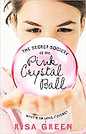 Erin has one thing on her mind: writing the perfect essay that will earn her one of the spots in an all-expenses paid trip to Italy to study art. She’s got the highest GPA in her 10th grade class, but she also lives a rather normal, boring life. There’s nothing she can write about herself that will make her stand out. That is, until her aunt dies and leaves her a pink crystal ball. Erin and her friends believe it’s nothing more than a toy, until the things she asks it for start to come true