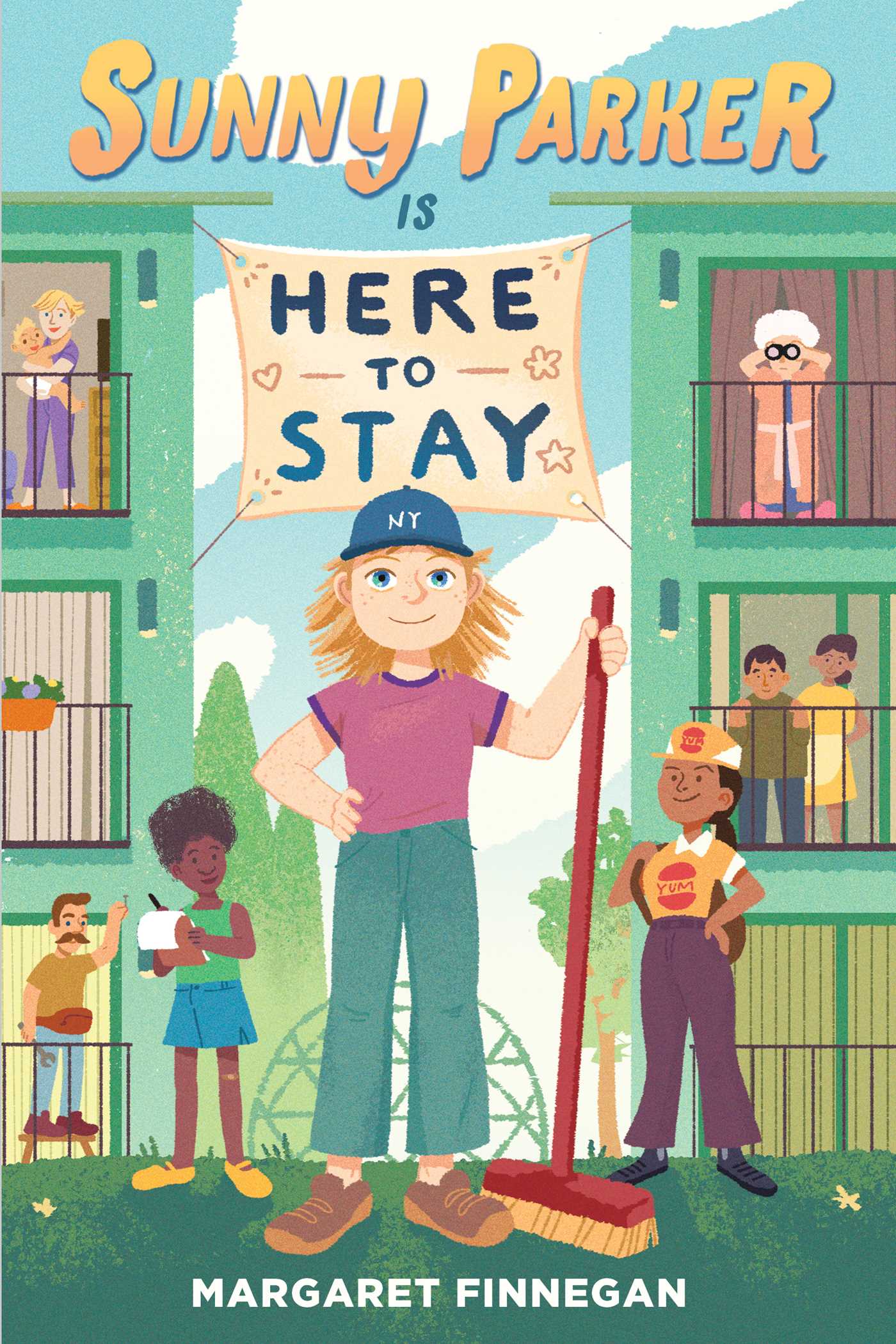
Sunny Parker does her best to live up to her name, bringing the sunshine into the lives of her dad and her best friends. But she sometimes finds it hard to find the bright spots in the goings on in her community. Like when protests erupt over converting an old school into affordable housing or when she learns that one of the residents in her own apartment complex suffers from domestic abuse.
Her dad says not to get involved, to keep her head down and fly under the radar to keep negative attention off their own affordable housing complex. But Sunny can’t just sit by and let misconceptions color the way people are treated. Trouble is, living up to her own principles may get her in trouble with the dad she loves so much.
Sunny Parker Is Here To Stay by Margaret Finnegan asks readers to think beyond the surface of social issues like affordable housing, houselessness, and domestic abuse. It also challenges stereotypes of race and the elderly. Again and again Sunny encounters people who don’t want to get involved or feel helpless to change the outcome of decisions made by those in charge.
Sunny struggles with how to respond until she ultimately finds a way forward that lets her be true to herself while also repairing relationships with those she loves. Sunny Parker’s story is a tender tale likely to resonate with young readers on the cusp of change or confusing times in their own lives. I highly recommend it for readers aged 9 to 12.
The author provided a copy of this title in exchange for my honest review.
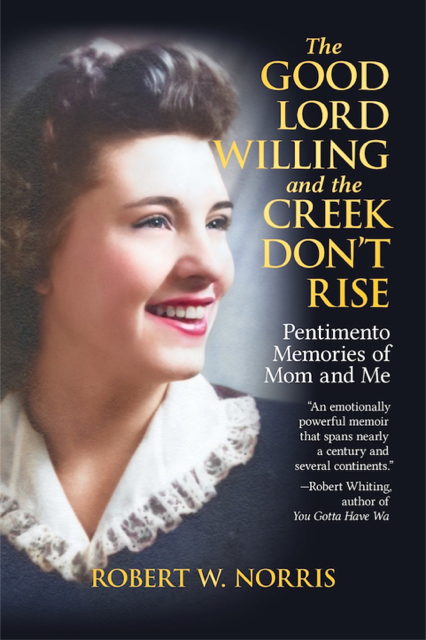
Today I’m featuring a guest post by Robert Norris, author of a memoir that is also a tribute to his mother called, The Good Lord Willing and the Creek Don’t Rise: Pentimento Memories of Mom and Me. Here he talks about how she fostered in him a love of stories. Read on to the end to find out more about the author and his work.
My Mother Imparted to Me a Love of Stories
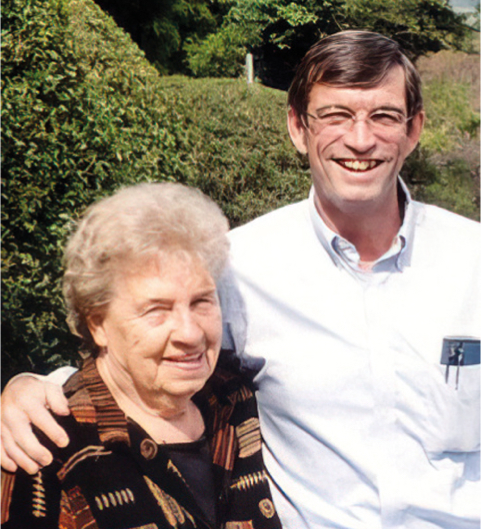
Mom died January 14th, 2021, just four days short of her 95th birthday. In the ensuing weeks, I spent a lot of time reading through the voluminous amount of correspondence we’d maintained for decades. She was a prolific letter writer and wonderful storyteller. Going through all those letters was like reliving our lives and many adventures together. It was the motivation I needed to write a memoir and tribute to her life and spirit.
If there’s one gift that I treasure among the many she gave me, it’s the love of stories. As a kid, I would sit at her feet enraptured by her tales of her family migrating from North Dakota to Oregon and Washington during the Great Depression. She told these stories with such color and generosity of spirit that it seemed she’d never suffered a moment in her life, that truly a life of poverty was the path to happiness, that warmth and laughter were to be found in the rags one had to wear day after day, in a diet of potatoes and cabbage, in freezing winter nights huddled together in the bed of a jalopy truck on the side of a road, in their pilgrimage across the mountains, valleys, and plains of 1930s Montana, Idaho, and Washington.
In later years after her divorce from Dad and excommunication by the Catholic Church, she would tell the story of going to church one Sunday and the priest refusing to give her Communion. When he bypassed her at the Communion rail and moved on to the next person, she reached out, grabbed him, and gave him a piece of her mind. When I’d ask her what the reaction of the rest of the congregation was, she’d shrug her shoulders and say, “Oh, you know how people are. They just clucked away like a bunch of hens in a henhouse.”
A few years after I became a conscientious objector to the Vietnam War, refused my military order to go fight in the war, and spent time in a military brig, Mom admitted to me that she’d finagled her way on to my air base shortly after my court martial, stormed into my commanding officer’s office, and was physically escorted off the base because she insulted him when he wouldn’t let her see me. She said the security police told her she could be shot if she tried to get on the base again. I remember Mom winked at me and said, “Once again, I didn’t control my Irish sassiness. Maybe it’s one of the reasons I’ve survived this long.”
In 1983, my nomadic ways brought me to Japan, where I eventually found my niche as a university professor teaching English. Over the next three decades, Mom made several trips to Japan. She began studying the Japanese language in order to try to communicate better with the people she met here. Sometimes she was accompanied by a friend and the two of them would have little adventures on their own while my wife and I were working. Later on at supper, she would regale us with stories of her encounters with the people she’d met, her misadventures with the language, cultural misunderstandings, friends made and hugs exchanged, and the many kindnesses shown her. Sometimes she’d conclude those stories by saying, “You can take the girl out of the country, but you can’t take the country out of the girl.”
During the last month of Mom’s life, she often fretted about the possibility of her loved ones forgetting her. That was an impossibility. I’ll never forget her unconditional love, her infectious laugh, her warmhearted hugs, and her family stories. Oh those stories. That’s why I wrote the memoir!
———–
Bio
Robert W. Norris was born and raised in Humboldt County, California. In 1969, he entered the Air Force, subsequently became a conscientious objector to the Vietnam War, and served time in a military prison for refusing to fight in the war. In his twenties, he roamed across the United States, went to Europe twice, and made one journey around the world. In 1983, he landed in Japan, where he eventually became a professor at a private university, spent two years as the dean of students, and retired in 2016 as a professor emeritus. Norris’s latest book is The Good Lord Willing and the Creek Don’t Rise: Pentimento Memories of Mom and Me, a memoir and tribute to his mother. He and his wife live near Fukuoka, Japan. Learn more about Robert at his website: https://robertwnorris.com/
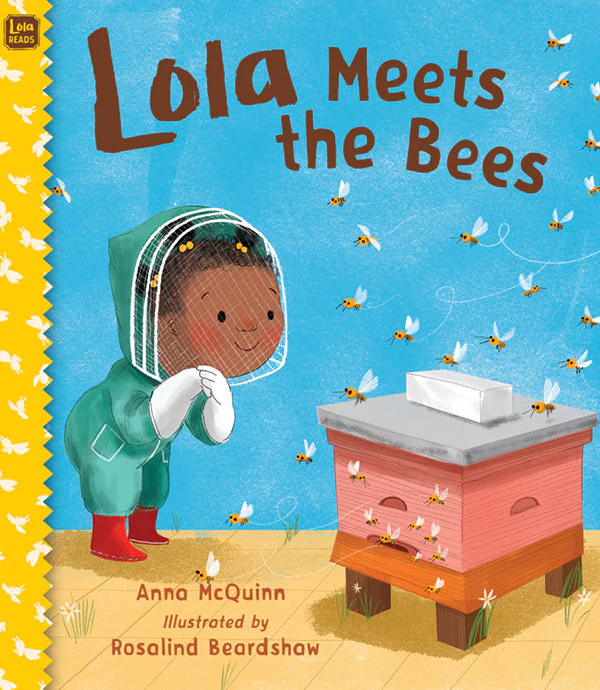
Lola Meets the Bees by Anna McQuinn is a cute picture book that teaches little ones about honeybees. It starts when Lola visits her mom’s friend Zora, who keeps bees on the rooftop of her home in the city. She sees bees flitting from flower to flower, spreading pollen as they go.
Lola learns that bees don’t sting unless you threaten their babies, which are inside the hive. She wears a special suit to keep her safe when looking inside. Zora teaches Lola about how the hive boxes are put together and where the bees store honey. Lola gets to taste some of the yummy honey Zora has collected.
When her trip is over, Lola wants to know how she can help the bees at her own house and takes some seeds to plant flowers of her own. The story is a great way to show children how they can do things to help the natural world even if they live in an urban area.
Illustrations by Rosalind Beardshaw are bright and cheerful. Lola Meets the Bees may just inspire kids and their parents to check out the whole series of stories featuring Lola.
The publisher provided a copy of this title in exchange for my honest review.
Today I’m featuring a guest post by author Ruth Behar, whose books feature complicated mother-daughter relationships. Read on at the end of her post for more info about the author and her books.
Relationships between mothers and daughters are always at the heart of my stories. In my first middle-grade novel, Lucky Broken Girl, which is based on my own life, Ruthie, an immigrant girl from Cuba, is suddenly bedridden because of a severe leg injury that takes place in 1966 in a car accident. Ruthie must depend on her beautiful young mother, who gives up her nights out, pretty outfits, and high heels to care for her, creating painful moments of resentment between them. In my next novel, Letters from Cuba, a Polish Jewish girl, Esther, the eldest child in her family, finds her way to Cuba in 1938 and leaves behind an exhausted and enraged mother and four siblings in hopes of helping a father who has been a poor businessman and failed to bring the rest of the family to safety. Once in Cuba, Esther realizes how her mother was stern with her because she needed her so much. She comes to appreciate that her mother taught her the valuable skill of sewing dresses. That skill, used by Esther with her unique creativity, becomes the magical means of getting the family out of Poland in the nick of time.
My latest novel, Across So Many Seas, begins in 1492 as the Edict of Expulsion is proclaimed in the city of Toledo in Spain. Twelve-year-old Benvenida hears it for the first time, her mother whispering to her that it doesn’t bode well for them as Jews. That’s when Benvenida learns they must either convert to Catholicism or leave their Spanish homeland. Her immediate family chooses to leave to maintain their faith, but her extended family decides to convert in order to stay. This fracturing of the family is painful, and Benvenida finds comfort in writing poetry. The reason she can read and write is because her mother has taught her. Girls in that era were rarely literate. Her mother came from a family of printers, so she learned to read and write. She teaches her daughter, but Benvenida goes a step farther, writing poetry, something inconceivable for girls in that era. In her poems, she unveils her feelings, her sense of loss, the memory of the nightingales singing, and her hope for a new home elsewhere. She writes one poem on a parchment and tucks it into the wall of the courtyard surrounding their home as she is departing, to leave her words behind for the unknowable future.
In the next part, we meet Reina in 1923, just as the Ottoman Empire has fallen and Turkey is becoming an independent nation. Reina and her three sisters, mother, and father are wondering what this change will mean for them as Sephardic Jews who descend from ancestors who left Spain in 1492. They have maintained the Spanish language, even centuries after the expulsion, and fear that Turkey will now impose nationalism and they will only be allowed to speak Turkish. Reina, who is twelve, looks forward to the freedom that has been promised to girls and women. But she disobeys her father, who punishes her by declaring her dead and arranging for her to go to Cuba and be married off in three years’ time. In the midst of this heartbreak, as she prepares to leave home, her mother teaches her old songs from Spain and how to play the oud. Reina will never see her mother again, but she will remember her forever through the sad words of the songs.
In the third part, it is 1961, and Alegra, the daughter of Reina, is twelve and growing up in the idealistic era of the Cuban revolution. She dreams of participating in the literacy campaign and teaching people in the countryside how to read and write. Her father won’t allow her to go, but her mother gives her permission, wanting her to have the freedom she never had. Then, in the fourth and final part, we meet Alegra’s daughter, Paloma, who is twelve in the year 2003. She seeks to understand the legacy passed on to her by her ancestors. She turns to her grandmother Reina to learn the sad songs from Spain and to her mother Alegra to understand the power of words to connect with those who came before. Paloma will be the one who, while vacationing in Spain with her family, will be in awe of the parchment that has been found with some mysterious words at the Sephardic Museum in Toledo, and she will feel the connection to Benvenida. Time will slip away and the past won’t seem so distant…
In all three novels, I’ve come to see how mothers and daughters take journeys together, mothers passing on knowledge, hope, and the possibility of freedom to their daughters, and daughters actively accepting this heritage, and finding their way forward.
Bio: Ruth Behar is a Cuban-born anthropologist and writer of books for young people. She won the Pura Belpré Award for her middle-grade novel, Lucky Broken Girl. Her second novel, Letters from Cuba, was selected for the Kirkus list of best historical fiction. Her picture book, Tía Fortuna’s New Home, is on Kirkus and School Library Journal best book lists. She and her son, Gabriel Frye-Behar, co-authored Pepita Meets Bebita, a picture book about the joys of family. Behar’s new novel, Across So Many Seas, will be released on February 6, 2024. The first Latina to win a MacArthur “Genius” Grant, Behar teaches at the University of Michigan. Find her online at https://www.ruthbehar.com/, @ruthbehar (X), and @ruthbeharauthor (Instagram).
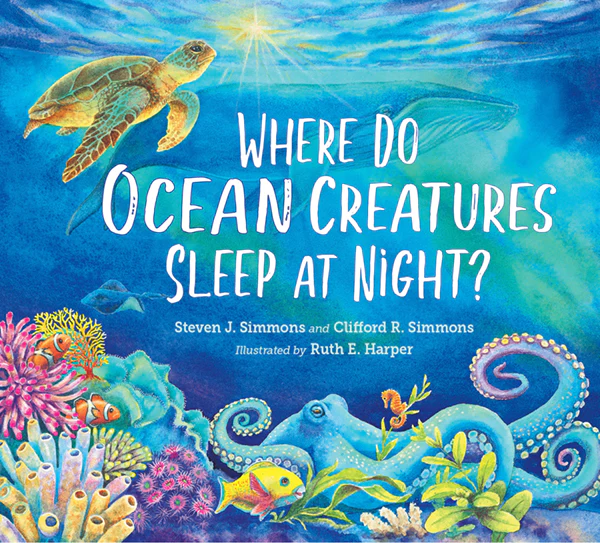
Curious children want to know: What happens to things that live in the ocean when its time to sleep? A picture book by Steven J. Simmons and Clifford R. Simmons satisfies that curiosity in their book, Where Do Ocean Creatures Sleep At Night?
The book covers some widely recognized sea life, like stingrays, which burrow in sand and keep their bodies flat and hidden. And clownfish, like Nemo and his dad, that rest in anemones, which are poison to other fish. Also, whales nap near the surface, where they can take in air from their blowholes.
I have to admit I didn’t know where ocean creatures sleep either, and so I discovered things I didn’t know too, which in my opinion makes for a great picture book that adults like to read. For instance, I learned that an octopus can sleep by day or night. It hides in a hole and sometimes it changes color, but it’s not understood why. Also, a parrotfish sleeps in a mucus cocoon it makes each time it sleeps.
Illustrations by Ruth E. Harper are muted and soothing, perfect to give the impressions of creatures ready for bed, including children.
The publisher provided a copy of this title in exchange for my honest review.
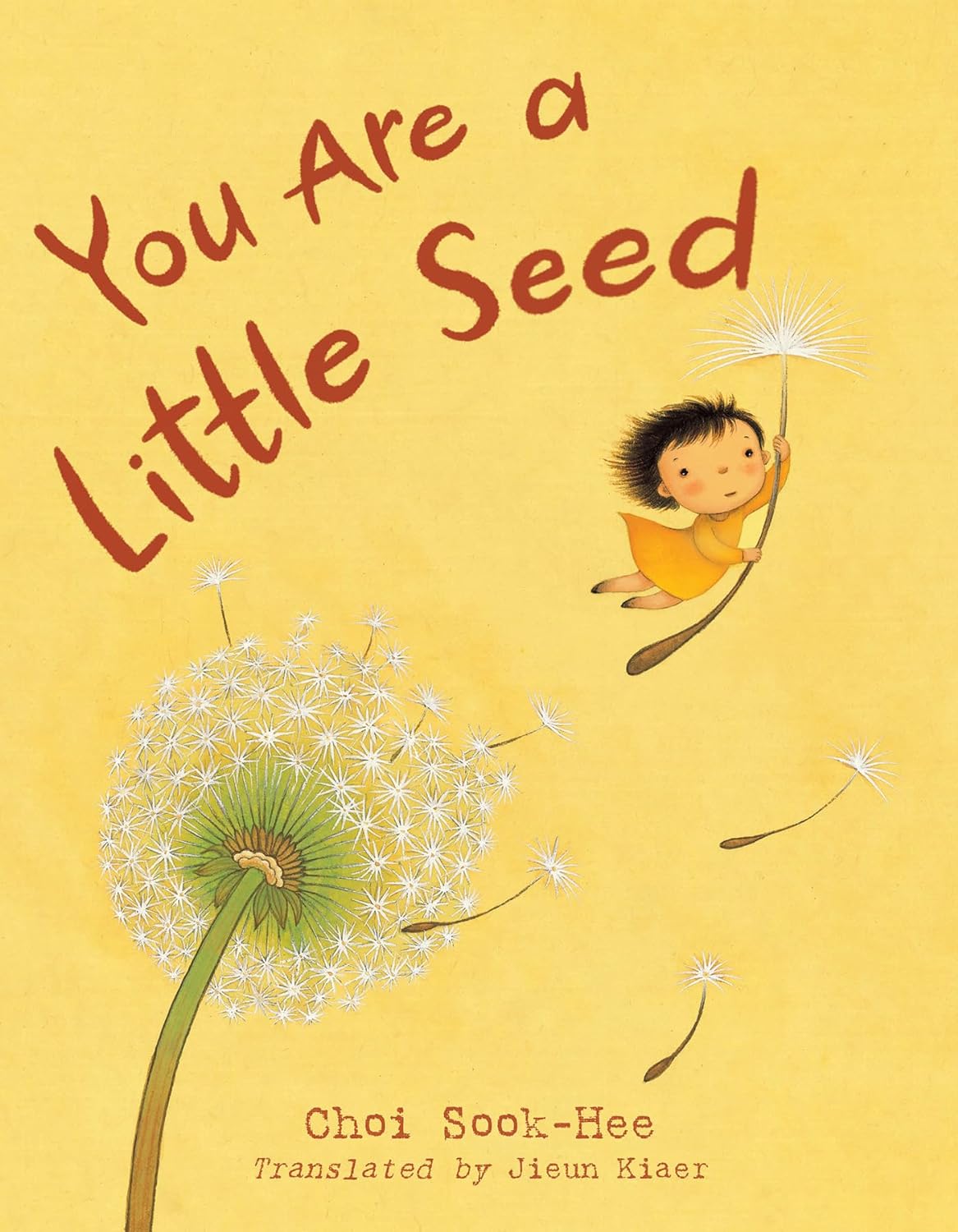
If you’re looking for a sweet picture book with tender drawings that capture the joy of life beginning, look no further than You Are a Little Seed. Written and illustrated by Sook-Hee Choi, the book shows different types of seeds and the flowers they grow into.
Some seeds are light and fluffy and blow in the wind, like those of a dandelion. Some are ugly and wrinkled, but they turn into sweet-smelling lilacs. Some, like lotus flowers, release their seeds from pods.
The book ends by says, “Yes, you are a seed, too — with a flower in your heart.” The illustrations are colorful and soothing and show lots of children looking at the seeds then interacting with the flowers that bloom from them.
You Are a Little Seed is a great book for bedtime reading, when it is sure to delight both parents and children.
The publisher provided a copy of this title in exchange for my honest review.
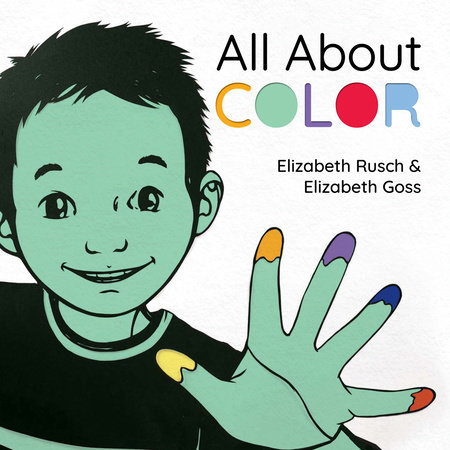
All About Color, a picture book by Elizabeth Rusch and Elizabeth Goss, opens with a surprise fact: Color doesn’t exist. We only see blue skies and green grass and yellow flowers because light sends messages to our brain.
The illustrations are also unexpected, as they show people with green or purple skin and things in the world around us in unusual tones. The choices compel readers to look at the world around them with new eyes.
But the book also focuses on what color means when we do see it. Team uniforms to help you identify who is on your side. Stop lights that regulate traffic. Red on a spider to warn of danger.
All About Color starts off playful on the cover, which shows an illustration of a child holding up a hand, with cutouts on the fingertips in different colors to look like finger paints. And extra info at the back talks about the science behind color and also the role it plays in emotion. It’s the kind of picture book that children and parents will want to read over and over.
The publisher provided a copy of this title in exchange for my honest review.
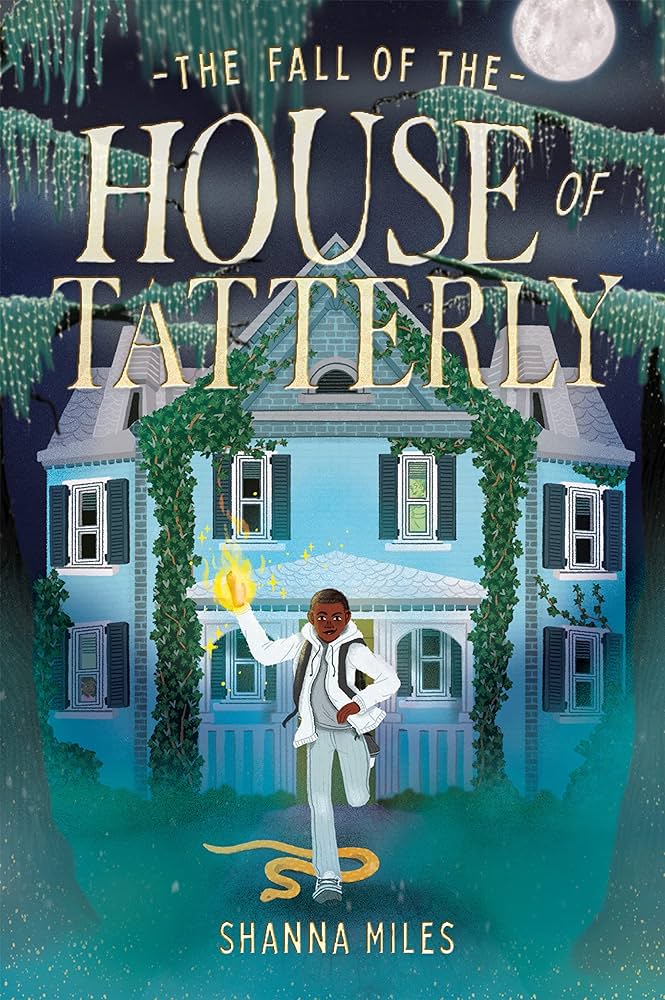
Theo Tatterly has a special gift. He can see ghosts and help them peacefully transition to the next world. He comes from a long line of people with magical abilities and both the living and the dead reside in the ancestral home in South Carolina. Theo, as the last male in the line, is the main target of an evil force who wants to oust them from that home. If he wants to save it, he will have to stay clear-headed and call on his cousins for help.
The Fall of the House of Tatterly by Shanna Miles has an interesting premise. A 12-year-old boy finding his talents and working to save his family. The community he’s part of has many ways to protect themselves from being discovered and harmed, but even so forces of evil work against them. There’s a strong family connection, with multiple generations living in the same household.
I found the story more interesting in the beginning, when the author was creating Theo’s world and establishing his relationship with his friends and cousins. But as it went along, I got confused by the plethora of aunts and their abilities, as well as other characters who made brief appearances. Also, magical creatures sometimes showed up, and I wasn’t sure of their purpose.
Personally, I love fiction set in the South, and I thought the author did a nice job of evoking the possibility of an alternate reality in a mysterious place. The story was not for me, but I can see how young readers may ignore the issues that bothered me and enjoy reading it.
The publisher provided a copy of this title in exchange for my honest review.